

SaaS isn’t dying
It’s being sorted. The question is: what’s your moat?

When you look at these charts:
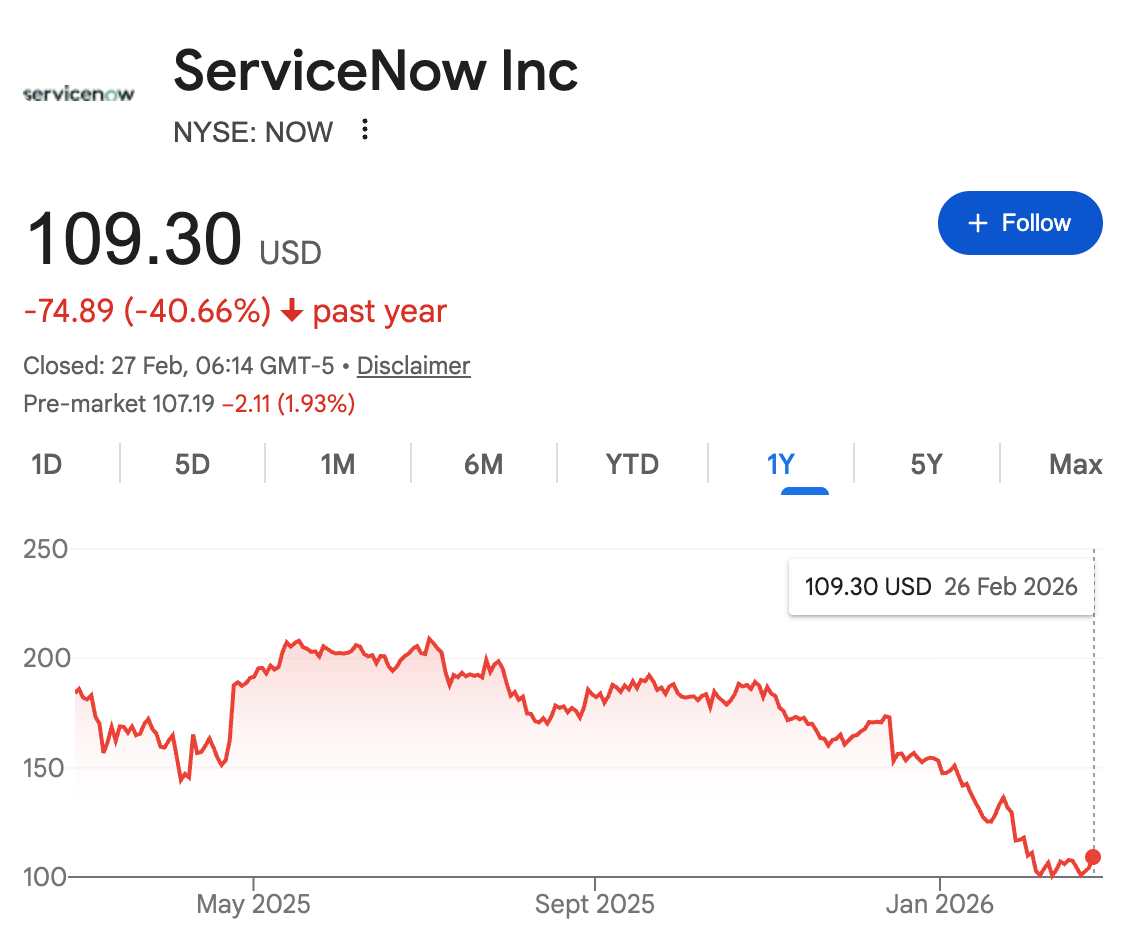
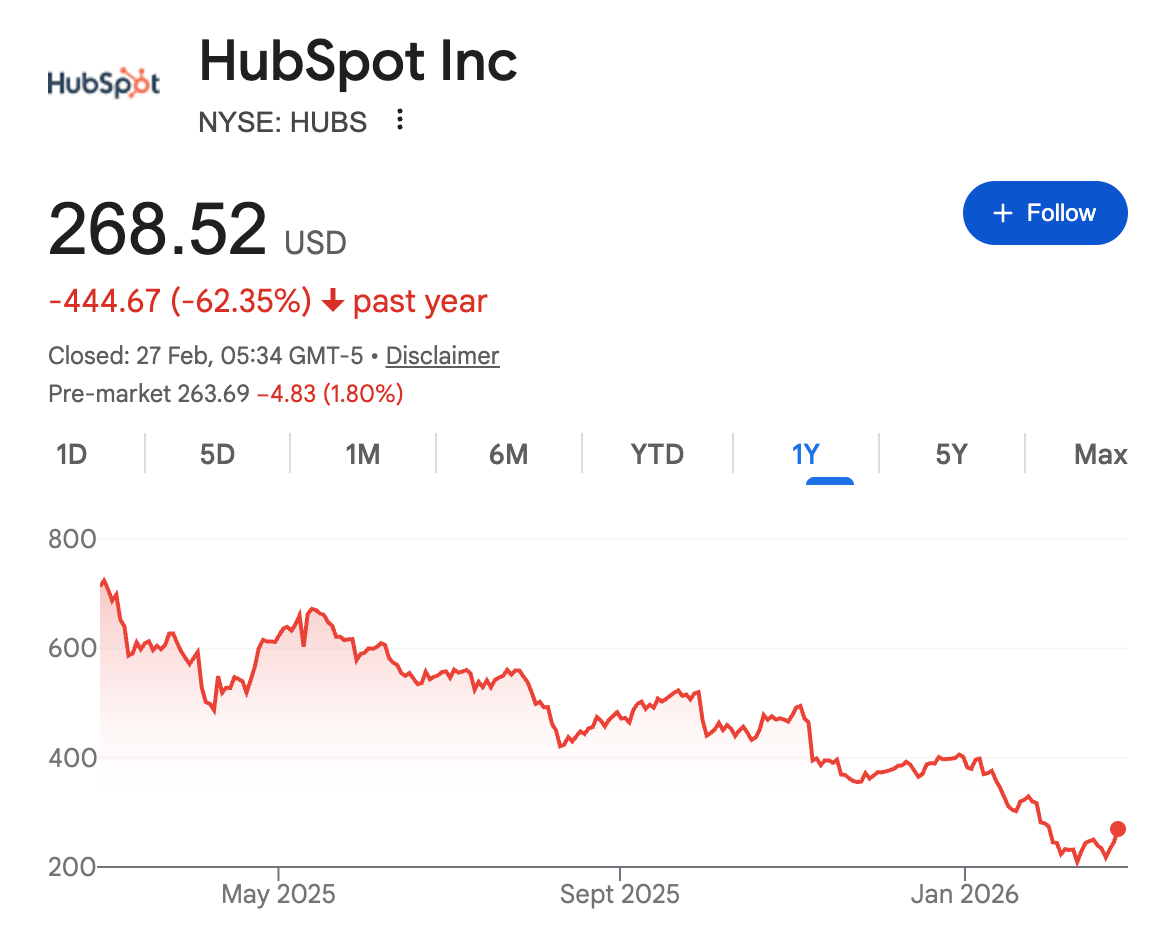
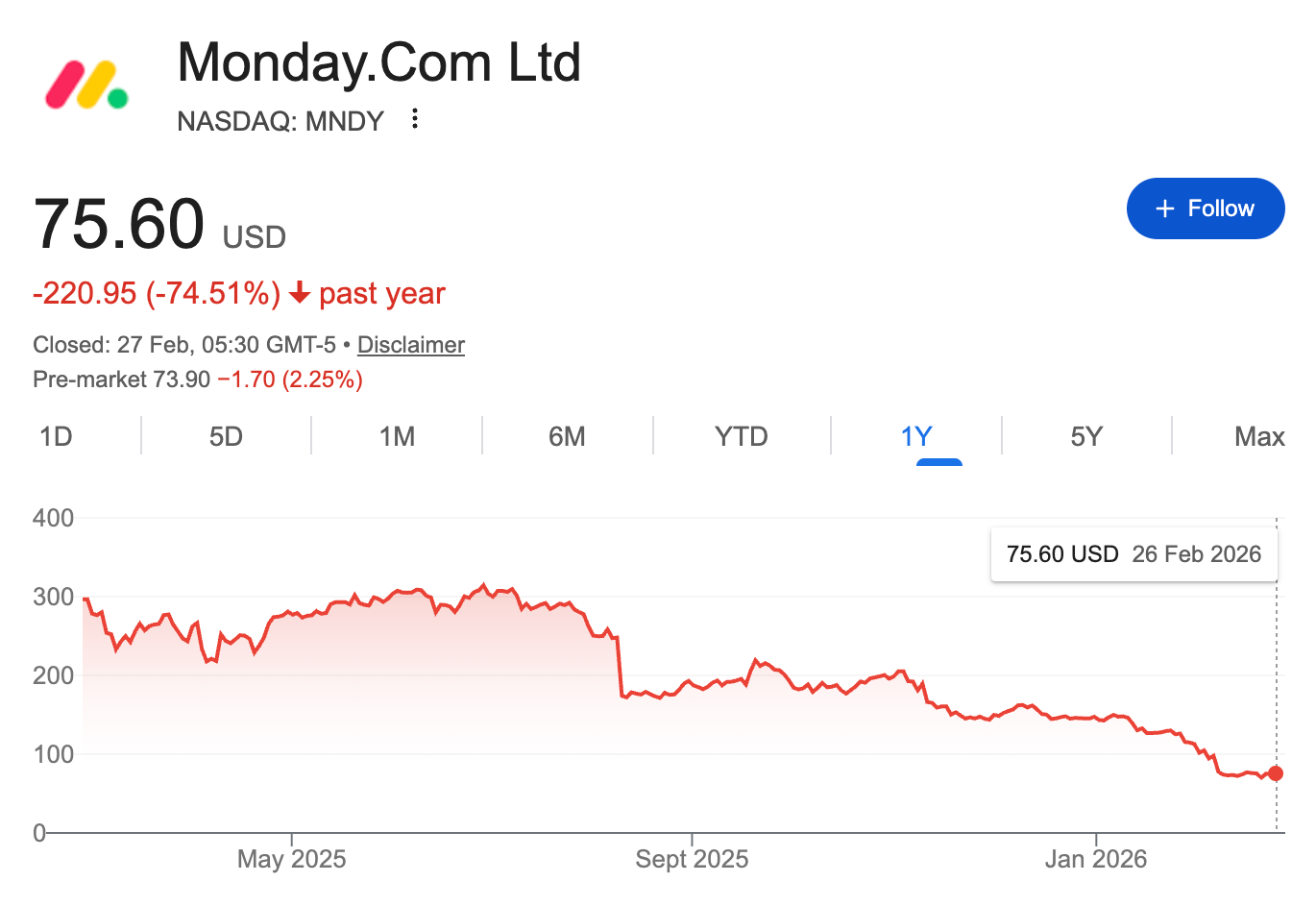
I’m sure you’re asking: so… is SaaS actually dying?
I get why people go there. In the last 18 months, the “AI eats software” narrative got louder, and the market clearly started repricing the space.
But I don’t think this is a SaaS funeral.
Here’s what I think is happening.
What the market is really pricing
This isn’t about SaaS. It’s about defensibility.
AI is doing what every platform shift does: it compresses differentiation.
It exposes where “SaaS” was really just thin workflow digitization — copyable features, weak switching costs, and products that looked defensible mainly because building alternatives used to be hard.
When building gets cheaper and faster, that kind of defensibility gets repriced first. And hard.
So what actually survives?
In my experience, the SaaS companies that come out stronger tend to have at least one of these moats:
1- Workflow depth - switching is painful, not just inconvenient
When a product is embedded in core workflows like integrations, compliance, governance, and years of configuration, leaving isn’t a software decision. It’s an organizational project that can take quarters.
Think Veeva in life sciences: replacing it touches regulated processes, validation, and compliance documentation across teams.
That’s not something AI wipes away. If anything, automation increases the need for controls, auditability, and governance, which deepens the lock-in.
2- Compounding operational logic - the longer you use it, the harder it is to replicate
Some products don’t just deliver value, they accumulate advantage. 10 years of deal patterns, exceptions, approvals, and workflow logic isn’t just “data.” It’s institutional memory baked into how the business runs.
The key word here is operational.
Foundation models can be trained on generic data at scale. But they can’t replicate your specific business logic, edge cases, and decision history. Competitors can copy your features, but they can’t copy the feedback loop running inside your context.
3- Distribution advantage - the moat isn’t the product, it’s the reach
Enterprise incumbents aren’t advantaged because they’re big. They’re advantaged because they have installed base, ecosystem leverage, and partner channels that let them absorb platform shifts faster than most startups can.
ServiceNow may be down sharply, but they’re still deeply embedded in enterprise buying and delivery.
A startup can build something better and still never get a real shot at the account. This moat is real, though worth watching: new buying behaviors and AI-native procurement will test it over time.
Repriced is very different from disrupted.
The part most takes miss
AI doesn’t just disrupt products, but also disrupts pricing units.
Seats matter less when agents do the work. Outcomes, usage, and automation value matter more.
Companies still priced for “human users” in a world where agents are becoming the user will feel that mismatch, even if the product is good.
So if I’m advising a CEO right now, I’m pressure-testing:
→ Are we selling features or measurable outcomes?
→ Does our positioning reflect our moat today, or the one we had three years ago?
→ Are we priced for the world we’re moving into, or the one we came from?
What this means right now
Some of these drawdowns are deserved. Some aren’t.
But the defensible companies don’t need a new business model. They need to get sharper, and more honest, about what makes them hard to replace, and make that story show up everywhere: marketing, sales, renewals, and the board deck.
The sorting is happening whether they’re ready or not.
In the end, AI won’t kill SaaS. It’ll kill undifferentiated SaaS, and reward products that are hard to replace because they’re embedded in workflows, data, and governance.
Which also means your GTM needs a refresh: the story, the pricing unit, and the proof points that make your moat real to your buyers, not just to you.
Want to see your moat through a GTM lens? Grab my free GTM System Playbook to learn why your GTM breaks upstream, and what to fix first.
Between the lines
A company I advise asked me this week whether they should build their website on an AI builder like Lovable, Base44, that kind of thing.
It’s a perfect snapshot of what AI can and can’t replace right now.
AI builders are great for lightweight apps, prototypes, and landing pages where speed matters more than depth, and I say that as someone who uses Lovable a lot.
But most serious B2B marketing sites aren’t “pages.” They’re systems.
And they need:
SEO foundations and technical control
A real CMS and content workflows
Reliability and performance at scale
Clean analytics + tracking governance
Integrations with CRM/MAP/attribution
Security, permissions, and long-term maintainability
Design consistency + distinctive creative
In other words: AI makes building easier. It doesn’t make ownership easier.
That’s the broader SaaS story too. The tools that survive are the ones that hold up when the requirements move from “can we ship it?” to “can we run it?”
Thanks for reading & see you next Saturday!
Alon
Yeah I appreciate this interpretation because I've been struggling to hold the two common narratives in my head at the same time. The first is that AI platforms are weak wrappers that aren't the system of record, while somehow the Saas system of records are totally at risk. There's an obvious conflict there. As I was reading your article I kept thinking of Salesforce and how entrenched they are in their enterprise clients.